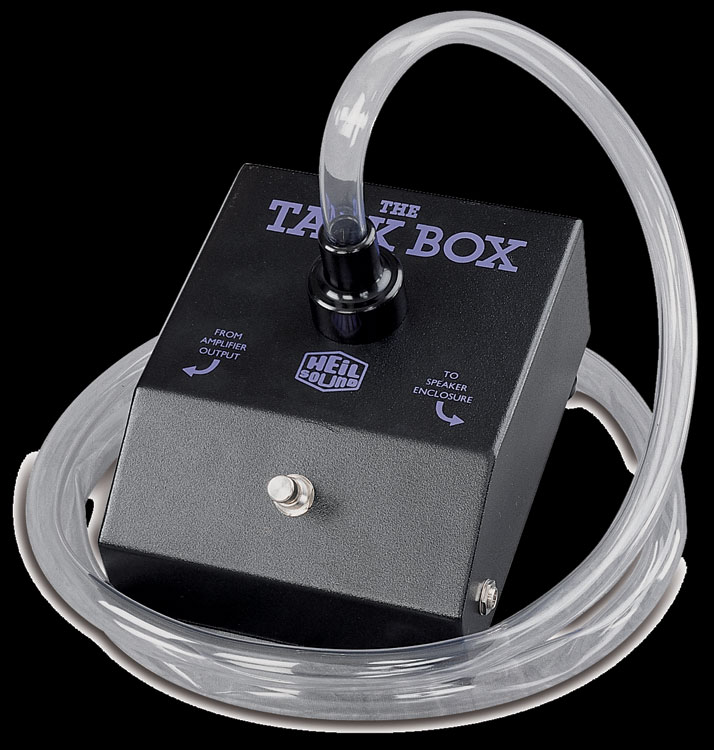
A talkbox sends an instrument's sound through a tube into the performer's mouth. The mouth shapes that sound and a microphone captures the result. It can make a guitar or synthesizer seem to speak, but it works differently from an electronic vocoder.
Before the arena-rock talkbox
Talkbox history reaches beyond the familiar image of a rock guitarist with a tube beside the microphone. The Country Music Hall of Fame documents how steel guitarist Pete Drake developed his system after encountering Alvino Rey's talking-instrument approach. Drake's recording “Forever” helped establish his reputation for a talking steel guitar.
The same account describes Peter Frampton learning about the device from Drake during George Harrison's All Things Must Pass sessions. That connection is a useful reminder that an effect can move between genres through musicians sharing techniques.
Bob Heil, Peter Frampton and the stage
Bob Heil's version helped make the talkbox a familiar rock sound. NAMM's oral-history account dates Heil's gift of a talkbox to Frampton to Christmas 1973. Frampton subsequently featured the effect on “Show Me the Way” and “Do You Feel Like We Do”; Frampton Comes Alive! arrived in 1976.
Heil Sound also documents the effect's association with Joe Walsh. The history is therefore better understood as a series of developments and influential performances than as one person inventing every form of the talking instrument.
Talkbox versus vocoder: the essential difference
With a physical talkbox, your mouth is part of the acoustic signal path. The instrument provides the sound; you shape vowels and consonants around it. You do not have to sing the melody with your vocal cords.
A vocoder instead analyses a modulator signal and applies aspects of its changing spectrum to a carrier. It can work with a recorded vocal and synthesizer inside a DAW. The DigiTech Talker's TalkBox program adds another naming trap: it is a digital effect, not a tube attached to a speaker driver.
Not every talkbox uses the same setup
The legacy Heil unit is driven from an amplifier's speaker output. The MXR M222 contains its own amplifier and driver and accepts a guitar or keyboard at its input. Follow the manual for the exact model: speaker-level and instrument-level connections are not interchangeable.
For recording, position the tube and microphone so the mic captures the sound shaped by your mouth. Begin at low volume. The MXR instructions recommend practising vowels, then consonants, before expecting clear words.
Where this connects to my music
I also own an MXR Talk Box, but I primarily use ElectroSpit. The ESX-1 is tube-free, so it is not a traditional tube-and-mouthpiece setup. It follows a different design, but I think it sounds great and enjoy using it in my music.
I also created a separate VST modelled on the Sennheiser VSM 201. The first experiments were effect chains in Ableton and Reaper, but they became too cumbersome. The dedicated VST is the result; it is a software vocoder, not a talkbox.
It would be misleading to label every robotic vocal a talkbox. In this Journal, the technique and the equipment should be named precisely. The useful creative link is the way a synthetic tone can become a phrase with rhythm, expression and intention.
A synth-part exercise to try
For a physical talkbox experiment, choose a simple sustained synth sound and a short single-note melody. Keep the melody slow enough to coordinate with the mouth shapes. First perform one vowel per note, then attempt a short phrase.
Record two versions: one with long notes and another with short gaps between words. Listen to which version communicates the rhythm more clearly. Leave room around the part in the arrangement; a busy lead playing alongside it can hide the articulation you worked to create.
If you only have a software vocoder, use the same short-phrase idea as an articulation exercise, while recognising that the performance technique and signal path are different.
Can a talkbox be used with a synthesizer?
Yes, when the talkbox and connections support it; the MXR manual explicitly includes keyboards. The melody still comes from the instrument. The performer supplies the changing mouth shapes.
Read the Serum patch-design guide for a simple synthesis workflow, or explore my music and videos.
Sources
- Country Music Hall of Fame: Pete Drake.
- NAMM: Peter Frampton oral history.
- Heil Sound: Frampton and Heil United Again.
- Heil Sound: 50 Years of Maximum Rock & Roll.
- MXR M222 manual and Dunlop: legacy Heil Talk Box.
- ElectroSpit: ESX-1 tube-free talkbox and ElectroSpit FAQ, including the manufacturer's explanation of how it differs from a tube talkbox.
Cover image
A Dunlop Heil Talk Box. DUNLOP HEIL TALK BOX — kevin, via Wikimedia Commons/Flickr. CC BY 2.0. Image unmodified. License: CC BY 2.0.
