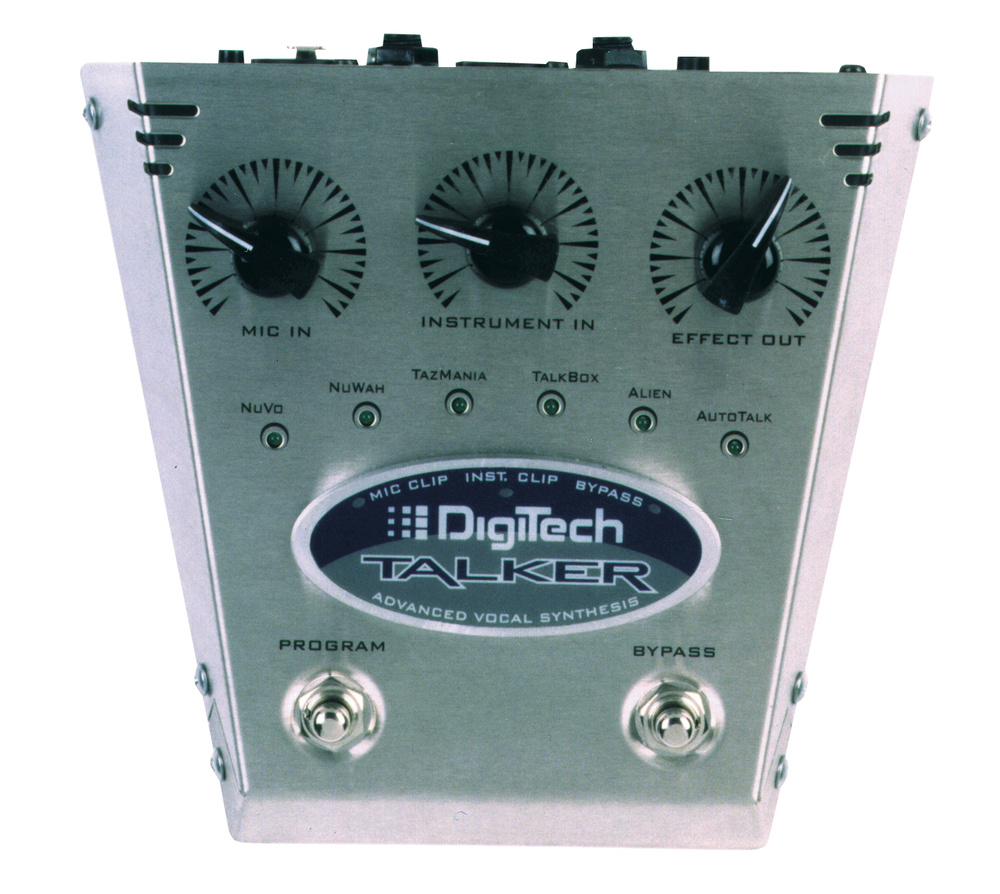
The DigiTech Talker is a digital vocal-synthesis pedal that combines an instrument signal with a microphone signal. It belongs to the late-1990s era of expressive digital effects, offering talking-instrument sounds without requiring the mouth tube used by a physical talkbox.
A late-1990s instrument from the IVL era
The Talker's original manual identifies IVL Technologies' Advanced Vocal Synthesis as the technology behind the pedal. Its declaration of conformity is dated 6 October 1997, while contemporary coverage in Music Connection's October 1998 “New Toys” column places it in the late-1990s effects market.
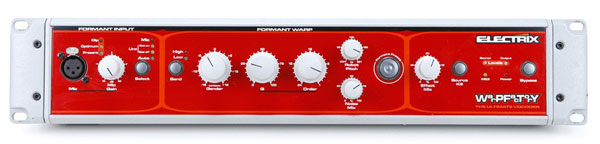
I also use an Electrix WarpFactory, which has a historical connection to the Talker. The WarpFactory manual identifies Electrix as a division of IVL Technologies Ltd.; the Talker manual credits IVL Advanced Vocal Synthesis. Both belong to the same wider IVL design and development story, though they are distinct devices with different approaches to processing.
Why the Cher story needs a correction
The Talker also appears in a famous production-history detour. Sound On Sound's original article about Cher's “Believe” attributed its distinctive vocal effect to the pedal. The publication subsequently added a correction explaining that the effect came from Auto-Tune and that the earlier explanation concealed the production method.
That correction matters: a recognisable processed voice is not enough to identify the equipment behind it. Vocoding, pitch correction and talkbox performance can all produce artificial vocal colours through different mechanisms.
What makes the Talker a talking-instrument effect?
The manual describes separate microphone and instrument inputs and six programs: NuVo, NuWah, TazMania, TalkBox, Alien and AutoTalk. Their behaviour differs. NuVo prioritises intelligibility, while NuWah is an instrument effect that does not require a vocal. The TalkBox program is a vocoder sound shaped to resemble older talkboxes; it is not a physical tube system.
For the basic voice-plus-instrument approach, both performances matter. Think of the instrument as providing the musical material and the voice as adding articulation. The exact result depends on the selected program.
The DigiTech Talker and Daft Punk
The Talker became closely associated with Daft Punk's robotic, talkbox-like vocal palette. In DigiTech's own product retrospective, the company points to the Talker on several Daft Punk songs, including “Harder, Better, Faster, Stronger” and “Get Lucky.” That association helped make the pedal part of the popular image of their signature sound.
Daft Punk used a range of vocal-processing techniques, so it is better to treat the Talker as one important part of that sound-world rather than assume every processed vocal came from this one pedal. The Talker is also not a conventional tube talkbox: it processes microphone and instrument signals digitally.
How I use the related sound
For a Talker-like, formant-shaped character in my music, I use the Electrix WarpFactory. It gives me a dedicated hands-on way to shape a source with formants; it is related to the Talker through Electrix and IVL, but it is not the same unit or an exact Talker emulation.
The VSM 201-inspired sound is a separate part of my setup. I first built effect chains in Ableton and Reaper to emulate the Sennheiser VSM 201 vocoder. The chains became too cumbersome, so I eventually created a dedicated VST modelled on the VSM 201. The Reaper chains were an early experiment, not the finished instrument.

That distinction is useful when arranging: the WarpFactory gives me a hardware formant effect, while the VSM 201-inspired VST is my own software vocoder. I can choose between them based on whether a part needs a tactile, talkbox-like gesture or a more controlled vocoder voice.
An exercise in vocal character
You can explore the musical question with a vocoder you already have; this exercise does not promise to emulate the Talker's algorithm.
- Write a two-bar phrase with only a few words. Leave room after it for an instrumental response.
- Record three performances: restrained speech, exaggerated consonants and a sustained sung version.
- Keep the carrier phrase unchanged while comparing the recordings.
- Choose one version for intelligibility and another for texture. Place them in different sections rather than stacking both throughout.
- Compare the result at similar levels, first dry and then with a small amount of space.
When an effect sounds impressive but the hook stops working, return to the rhythm of the words. Shorter phrases and clearer gaps often make a more useful arrangement test than another layer of processing.
Is the DigiTech Talker the same as the Vocalist Workstation EX?
No. They are separate DigiTech products. A session note, equipment list or recreation project should name the actual model used. Likewise, the Talker's TalkBox program should not be described as evidence that a recording used a tube talkbox.
Continue with the history of the physical talkbox, compare the VSM 201, or listen to I.
Sources
- DigiTech Talker original user's guide, archived copy.
- Electrix WarpFactory manual, including the IVL Technologies Ltd. declaration and description of the effect.
- DigiTech: Vintage Product Spotlight — DigiTech Talker.
- Music Connection, 12 October 1998: New Toys.
- Sound On Sound: Recording Cher's Believe, including the historical correction.
- DigiTech's product-manual index, listing Talker and Vocalist Workstation EX separately.